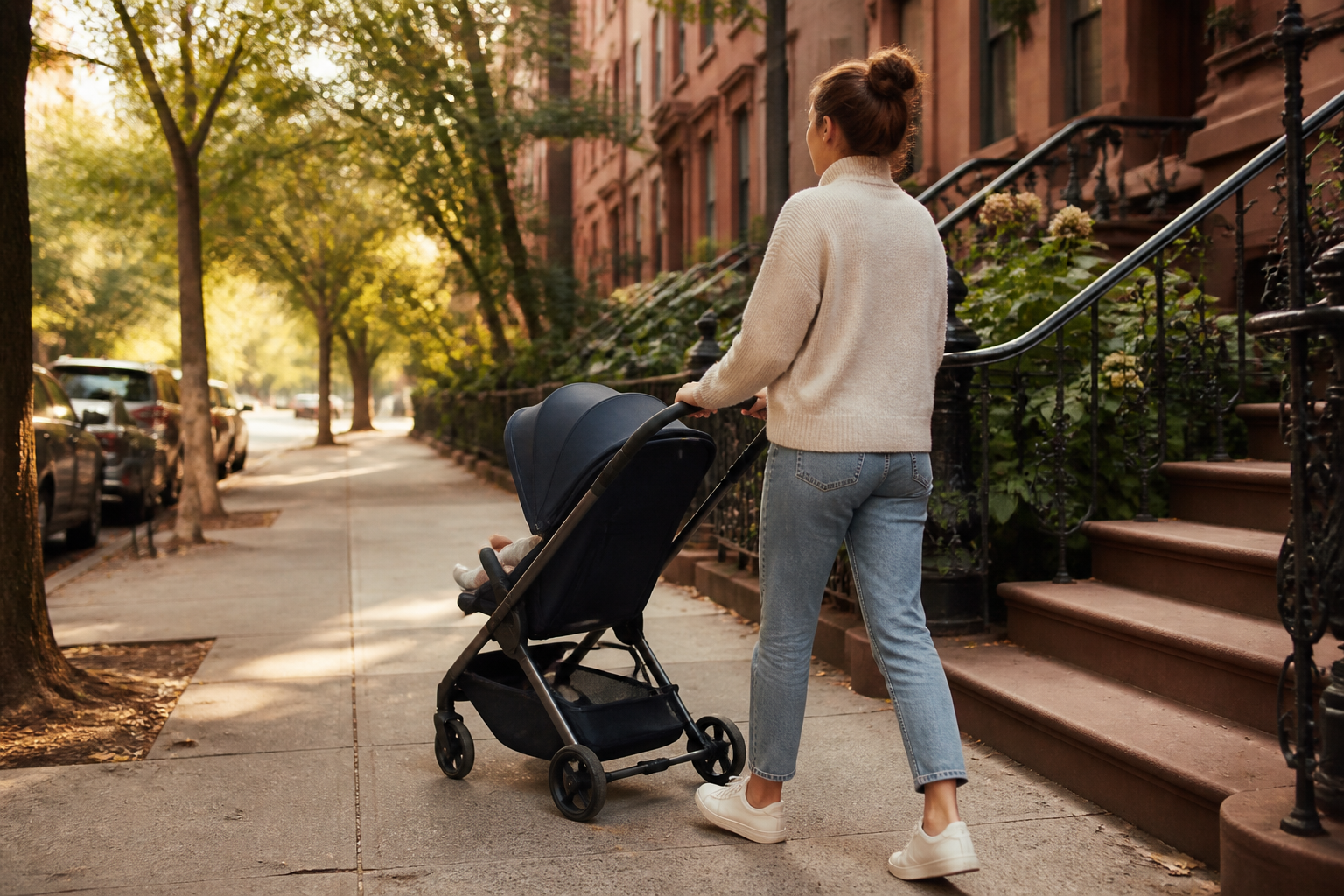
There is no single best stroller — only the best fit for how you move through your day. A compact travel stroller that shines in a city apartment may frustrate on gravel paths. A full-size everyday stroller with a huge basket may not fit in your car trunk. Use this framework before you compare brands or price tags.

Baby Common curates strollers from parent-loved brands with clear specs and honest descriptions. Pair this guide with our babywearing basics and newborn essentials guides to build a complete transport plan for the first year.
Know your primary use case
Before reading reviews or browsing strollers, write down where the stroller will spend most of its time. Your top three weekly trips matter more than a generic “best of” list.
Lifestyle matching table
| Lifestyle | What to prioritize | What to deprioritize |
|---|---|---|
| City walking + transit | Compact fold, light weight, one-hand steering, narrow width | Large basket, all-terrain wheels |
| Suburban errands | Larger basket, smooth ride, car-seat compatibility | Ultra-compact cabin fold |
| Travel and flights | Cabin-friendly fold, durable carry strap, quick fold | Heavy frame, bulky canopy |
| Active parents / trails | Larger wheels, suspension, hand brake | Minimal weight savings |
| Two children | Tandem or side-by-side with appropriate weight limits | Single-seat compactness |
| Mixed terrain (cobblestones, grass) | Larger wheels, good suspension | Ultra-light compact models |
Score strollers against your actual trips — school run, grocery store, park, airport, coffee shop — not against features you might use once.
Stroller categories explained
Understanding categories helps you narrow the field before comparing specific models.
Travel and compact strollers
Travel and compact strollers fold small and weigh less. They are ideal for apartments, taxis, public transit, and flights. Trade-offs include smaller wheels (less smooth on rough pavement), reduced storage basket capacity, and sometimes less recline for napping infants.
Best for: Urban parents, frequent travelers, families with limited storage space.
Full-size and everyday strollers
Full-size strollers offer comfort, storage, and recline options for longer outings. They typically have larger canopies, roomier seats, and bigger baskets. They are heavier and bulkier in the car trunk.
Best for: Suburban errands, long walks, parents who want one stroller for most situations.
Travel systems
Travel systems bundle an infant car seat with a stroller frame. You can click the car seat onto the stroller without waking a sleeping newborn. Convenient for the newborn stage; many families later add a lighter everyday stroller as baby outgrows the infant seat.
Best for: New parents who want a single purchase for car-to-stroller transitions in the first year.
Jogging strollers
Jogging strollers use three large wheels and suspension designed for running. They are not necessary for casual walks. If running is part of your routine, a dedicated jogging stroller with a hand brake and fixed front wheel (or lockable swivel) is worth considering.
Best for: Parents who run regularly with baby; not ideal as your only stroller unless you run often.
Double strollers
Double strollers come in tandem (one seat behind the other) or side-by-side configurations. Check weight limits for each seat, width for doorways and car trunks, and whether the layout works for your children’s ages.
Best for: Families with twins or a toddler plus newborn.
Specialty and adaptive strollers
Some strollers support specific positioning or mobility needs. Work with your care team when medical support or custom positioning is required.
Five questions to ask before you buy
These questions separate strollers that look good online from strollers that work in your real life.
1. How does it fold?
- Can you fold it one-handed while holding a bag or baby?
- Does it stand when folded, or does it flop open in your trunk?
- How many steps does the fold require — and can you do them without reading instructions after a week of use?
- If you take public transit, can you lift it onto a bus or train without help?
2. Will it fit your car?
Measure your trunk with the stroller folded. Product photos can be misleading — depth, width, and whether the wheels stick out all matter. If you have a small car, a compact fold is not optional.
3. What are the weight limits?
Check both the seat weight limit and the basket weight limit if you carry groceries or diaper bags. A stroller that works for a 6-month-old may feel different with a 2-year-old and a loaded basket.
4. Can baby nap in it?
Full recline matters for infants who fall asleep on walks. If you plan to use the stroller seat from birth, confirm the recline is flat enough and the harness fits a newborn. Many parents use a car seat on the frame for the first months instead.
5. How easy is maintenance?
Removable, washable fabrics and accessible wheels save frustration. Strollers get spilled milk, crumbs, and mud — plan for cleaning from day one.
Newborn vs. older baby
The stroller you need at 2 weeks may differ from what you want at 12 months.
First months: car seat on frame
Many parents use an infant car seat clicked onto a stroller frame for the first months. Benefits include easy car-to-stroller transitions and a familiar, supported position for newborns. Limitations include the infant seat weight limit (typically around 30–35 pounds or when baby outgrows the seat height-wise) and a heavier, less nimble setup.
Transitioning to the main seat
Once baby has head control and outgrows the infant seat, you will use the stroller’s main seat. Confirm:
- The seat reclines flat enough for a young infant if you skip the car seat stage
- The harness adjusts small enough for a newborn
- The canopy provides adequate sun and weather protection
See our newborn essentials guide for what to buy before baby arrives versus what can wait.
Terrain and wheel size
Wheel size and suspension affect ride quality more than many parents expect.
| Terrain | Wheel recommendation |
|---|---|
| Smooth sidewalks and malls | Small to medium wheels; swivel front wheels for maneuverability |
| Cracked pavement and curbs | Medium wheels; good suspension helps |
| Gravel, grass, trails | Large wheels; air-filled or foam tires; suspension |
| Cobblestones and old city streets | Larger wheels; avoid ultra-compact models |
If possible, push the stroller over a curb or sidewalk crack in a store before you buy.
Features worth comparing
Not every feature matters for every family. Prioritize based on your use case.
Canopy
A large, extendable canopy with UPF protection helps on sunny walks. Peek-a-boo windows let you check on baby without stopping. In rainy climates, confirm compatibility with a rain cover if you plan to use one.
Harness
A five-point harness is standard on infant strollers. Check that straps adjust easily and do not twist. Padded straps add comfort for longer rides.
Basket
A large, accessible basket holds diaper bags, groceries, and jackets. Some strollers have rear-access baskets that are hard to reach when the seat is fully reclined — test this in person if possible.
Brakes
Foot brakes should be easy to engage and release. Jogging strollers often add a hand brake for running downhill.
Handlebar
An adjustable handlebar accommodates parents of different heights. If two caregivers will push regularly, test both heights.
Try before you commit
If you can visit a store or borrow from a friend, test these actions:
- Push the stroller with one hand while simulating a phone or bag in the other
- Lift it into a car trunk (or measure against your trunk dimensions)
- Walk over a curb or sidewalk crack
- Fold and unfold twice without reading instructions
- Recline the seat fully and check harness adjustment
- Load the basket with a heavy bag to test stability
Online reviews help, but fit and feel are personal. A stroller that works for a tall parent may not work for a shorter one.
Pair with babywearing
Even the right stroller does not cover every situation. Stairs, crowded markets, contact naps, and quick errands often favor a carrier over a stroller.
| Situation | Stroller | Carrier |
|---|---|---|
| Long park walk with loaded basket | ✓ | |
| Coffee shop queue | ✓ | |
| Grocery store with narrow aisles | ✓ | |
| Airport with checked luggage | ✓ (gate-check) | ✓ (backup) |
| Contact nap on a walk | ✓ | |
| Sleeping newborn transfer from car | ✓ (car seat on frame) |
Read our babywearing basics guide for how carriers and strollers complement each other. Browse bags & carriers for carriers that fit your climate and wearing style.
Budget and timing
You do not need a stroller on day one if you have a car seat and a carrier. Many families buy a stroller in the first month once they know their routine.
- Start with one — you can add a travel stroller or jogging stroller later if needs change
- Travel systems bundle convenience but may not be your only stroller long-term
- Shop sales — browse current deals when you are ready to compare
Common mistakes to avoid
- Buying based on aesthetics alone — color and fabric matter less than fold, weight, and fit
- Skipping the trunk test — a stroller that does not fit your car becomes a daily frustration
- Assuming one stroller does everything — many families use a full-size stroller plus a compact travel model
- Ignoring weight limits — on the seat, basket, and car seat adapter
- Forgetting the second caregiver — handlebar height and lift weight affect everyone who pushes
When to shop Baby Common
We curate strollers and accessories from parent-loved brands — with clear specs, honest descriptions, and secure checkout. Whether you need a compact travel stroller, a full-size everyday model, or a travel system, browse strollers or all products when you are ready to compare options.
For the rest of your transport setup, see newborn essentials for the first month and our nursery setup checklist if you are still planning the room.

