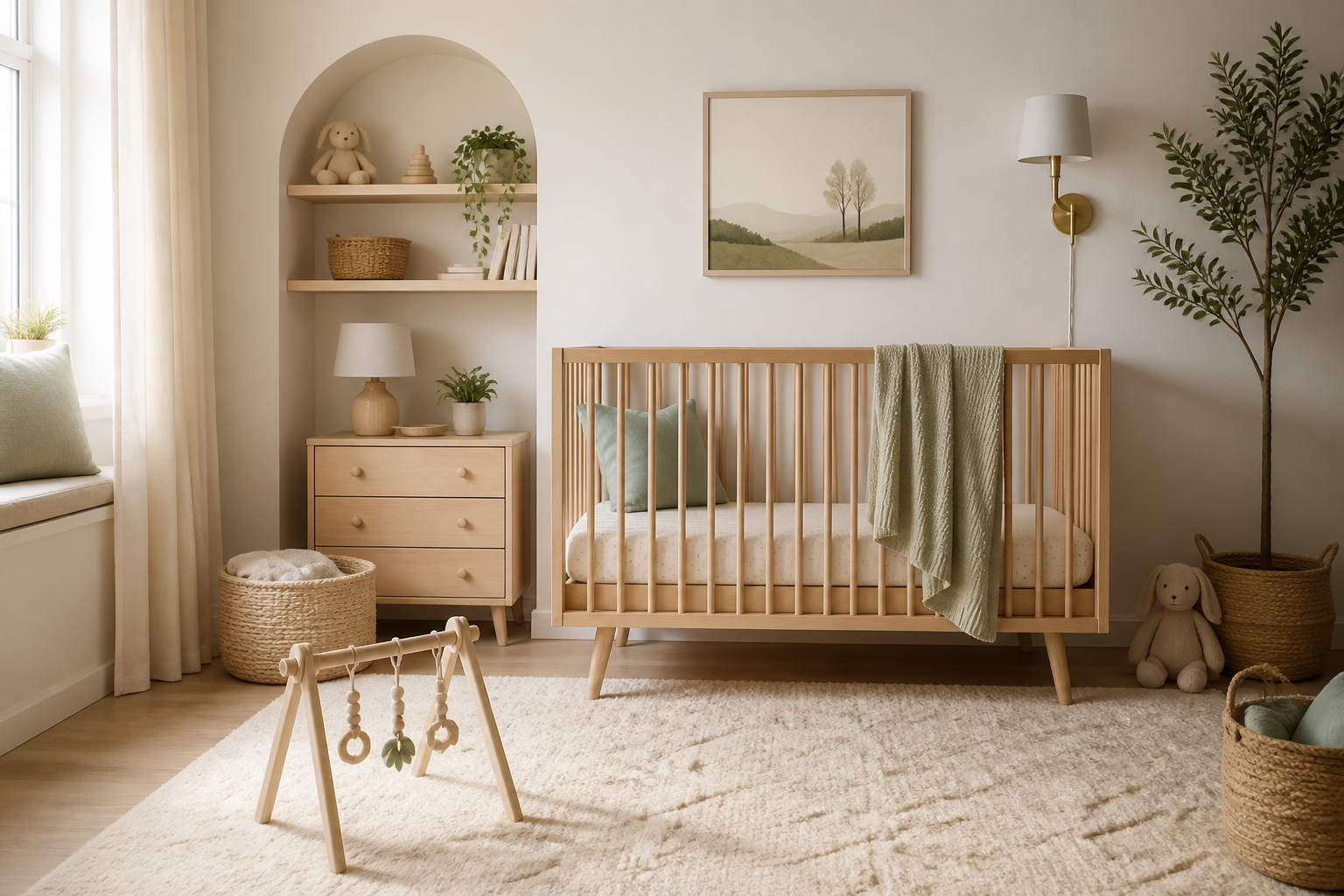
Setting up a nursery is less about buying everything on a registry checklist and more about creating a calm, safe space you can navigate at 3 a.m.

Baby Common curates strollers, nursery furniture, carriers, and everyday essentials from parent-loved brands.
Before you buy anything: plan the room
A nursery does not need a dedicated spare bedroom. Many families set up a bassinet in their own room for the first months, then transition to a crib in a nursery or shared space. Start by answering three questions:
- Where will baby sleep at night? Room-sharing in a bassinet or crib near your bed is common in the early months. See creating a sleep-safe environment for room setup guidance.
- Where will you change diapers most often? A changing station in the nursery is convenient, but a portable pad on a dresser works just as well.
- How will you move through the room in the dark? Clear paths matter more than décor.
Room layout checklist
- Sleep surface positioned away from windows, blind cords, and heaters
- Clear walking path from door to crib or bassinet
- Outlets covered; cords secured and out of reach
- Furniture that could tip secured to the wall
- Smoke and carbon monoxide detectors installed and tested
- Temperature comfortable for an adult in light clothing
Start with the sleep zone
The crib or bassinet is the anchor of the nursery. Everything else — storage, lighting, décor — supports this zone. Before you add paint colors or wall art, get the sleep area right.
Crib and mattress essentials
- Choose a firm, flat sleep surface designed for infants — a crib, bassinet, or play yard approved for overnight sleep
- Use a snug fitted sheet only; no loose blankets, quilts, bumpers, or pillows in the sleep area
- Confirm the mattress fits tightly with no gaps at the sides (you should not fit more than two fingers between mattress and crib rail)
- Avoid secondhand cribs with missing hardware or outdated construction
For detailed placement and product guidance, see our crib safety basics guide.
Crib placement
| Factor | Recommendation |
|---|---|
| Windows | Keep crib away from direct drafts, cords, and blinds |
| Wall art | Nothing heavy or framed above the crib that could fall |
| Monitors | Mount cords far from the crib; never drape cords inside |
| Furniture | No dressers or shelves a climbing toddler could reach from the crib |
| Electrical | No lamps, chargers, or devices within baby’s reach as they grow |
As baby develops — rolling, pushing up, pulling to stand — you will lower the mattress and remove mobiles or hanging items. Plan for that from the start.
Storage that works one-handed
You will often hold a baby while reaching for a onesie, burp cloth, or diaper. Storage at waist height beats deep cabinets every time.
Organize by routine, not by product type
Group items by when you use them:
| Zone | What to store |
|---|---|
| Sleep | Fitted sheets, sleep sacks, swaddles (if you use them) |
| Day outfits | Onesies, pants, socks in shallow bins |
| Diaper changes | Diapers, wipes, cream, spare outfits |
| Feeding | Burp cloths, nursing supplies, bottles if applicable |
Storage tips that save time
- Open bins or shallow drawers beat deep cabinets for quick access
- Label bins if multiple caregivers use the room
- Keep a small hamper or wet bag at the changing station for soiled clothes
- Leave counter space near the changing area — clutter slows you down at 2 a.m.
Browse nursery essentials for furniture and storage that fits your room size and budget.
Lighting and temperature
Soft, dimmable lighting helps preserve night vision during feeds and diaper changes. You do not need a smart-home setup on day one — a small night light or adjustable lamp is enough for most nurseries.
Lighting checklist
- Dimmable overhead or lamp for night feeds
- Night light with warm, low brightness (not directly in baby’s eyes)
- Blackout curtains optional — helpful in bright climates or summer, not required everywhere
- No bright screens or flashing lights near the sleep area during night wakings
Temperature and clothing
Aim for a comfortable room temperature and dress baby in layers rather than overheating the room. A common rule of thumb is one layer more than an adult would wear to be comfortable — but follow your pediatrician’s guidance for your climate and season.
Overheating is a risk factor caregivers can control. Use sleep sacks instead of loose blankets. Our sleep-safe environment guide covers temperature, clothing, and routine in more detail.
Changing station essentials
A dedicated changing table is optional. Many parents use a dresser with a changing pad on top — secure the pad per manufacturer instructions and never leave baby unattended on an elevated surface.
Keep within arm’s reach
- Diapers (newborn size to start; adjust as baby grows)
- Wipes or soft cloths with water
- Barrier cream
- A change of clothes
- A hamper or wet bag for soiled items
- Hand sanitizer for you (not for baby’s skin)
Changing station safety
- Use the safety strap if your changing pad has one — but never rely on it alone
- Keep one hand on baby at all times on elevated surfaces
- Store diaper cream, lotions, and small items out of baby’s reach
- Consider a contoured pad with raised sides for early months
Feeding and comfort zone
Whether you breastfeed, bottle-feed, or combination-feed, a comfortable spot in or near the nursery helps during night feeds.
What to include
- A chair, glider, or firm surface with back support
- A side table for water, burp cloths, and your phone or book
- A footrest if it helps your posture during long feeds
- Soft lighting you can adjust without waking the whole household
A nursing pillow is optional — some parents love them; others never use one. Wait to buy specialty feeding gear until you know your preferences.
What to buy before baby arrives
Focus on function first. You can add décor and extras once you understand your daily routine.
Priority purchase list
| Priority | Item | Notes |
|---|---|---|
| 1 | Safe sleep surface (crib or bassinet) | Approved for overnight infant sleep |
| 2 | Firm mattress + 2–3 fitted sheets | Wash before first use |
| 3 | Sleep sacks or appropriate sleep clothing | No loose blankets in crib |
| 4 | Diaper pail or bin with lid | Reduces odor between emptying |
| 5 | Monitor (if desired) | Audio or video; see health & safety |
| 6 | Comfortable chair for feeds | Can be borrowed or repurposed |
| 7 | Basic storage (bins, dresser, or shelves) | Waist-height access matters |
Strollers, carriers, and high chairs can often wait until you understand your daily routine — though having a stroller shortlist ready saves time when you are ready to shop. For outings, see babywearing basics and our bags & carriers collection.
What can wait
Resist the pressure to complete every item on a mega-registry before baby arrives. These are common purchases that many families delay:
- Full wardrobe — babies grow fast; buy sizes as needed
- Elaborate wall décor — function first, aesthetics later
- Multiple swings or bouncers — start with one if any; many babies prefer being held
- Every bottle brand — start with a small assortment; babies can be particular
- Full-size high chair — wait until solids around 4–6 months; browse high chairs when the time comes
- Expensive bedding sets — bumpers, quilts, and decorative pillows are not recommended in the crib
Safety audit before baby comes home
Walk through the nursery with fresh eyes — or ask a friend to do it. Small oversights are easy to miss when you are tired.
Final safety checklist
- Smoke and carbon monoxide detectors installed and tested
- Furniture secured to walls if it could tip (dressers, bookcases, changing tables)
- Outlet covers on unused outlets
- Blind cords tied up or replaced with cordless window coverings
- Monitor range tested from your bedroom
- New textiles washed with gentle, fragrance-free detergent
- Car seat installed per manufacturer instructions (not in the nursery, but essential before discharge)
- Pediatrician chosen and first appointment scheduled
Nursery on a budget
A safe, functional nursery does not require designer furniture or matching sets.
- Borrow or repurpose — a firm dresser with a changing pad beats an expensive changing table
- Buy sleep essentials new — mattress and crib should meet current safety standards
- Register for gift cards — lets you buy sizes and brands as needs become clear
- Shop curated collections — Baby Common focuses on gear parents actually use, with clear specs and honest descriptions
Browse all products or current deals when you are ready to compare options.
The first weeks: adjust as you go
No nursery is perfect on day one. You will discover what you reach for constantly and what sits unused. Move storage bins, add a second lamp, relocate the hamper — the room should serve your routine, not the other way around.
A nursery does not need to be picture-perfect when baby arrives. A safe sleep space, practical storage, and a few calm routines matter more than matching accessories. For the gear you will use outside the nursery, see newborn essentials for the first month and our strollers collection when you are ready to plan outings.
