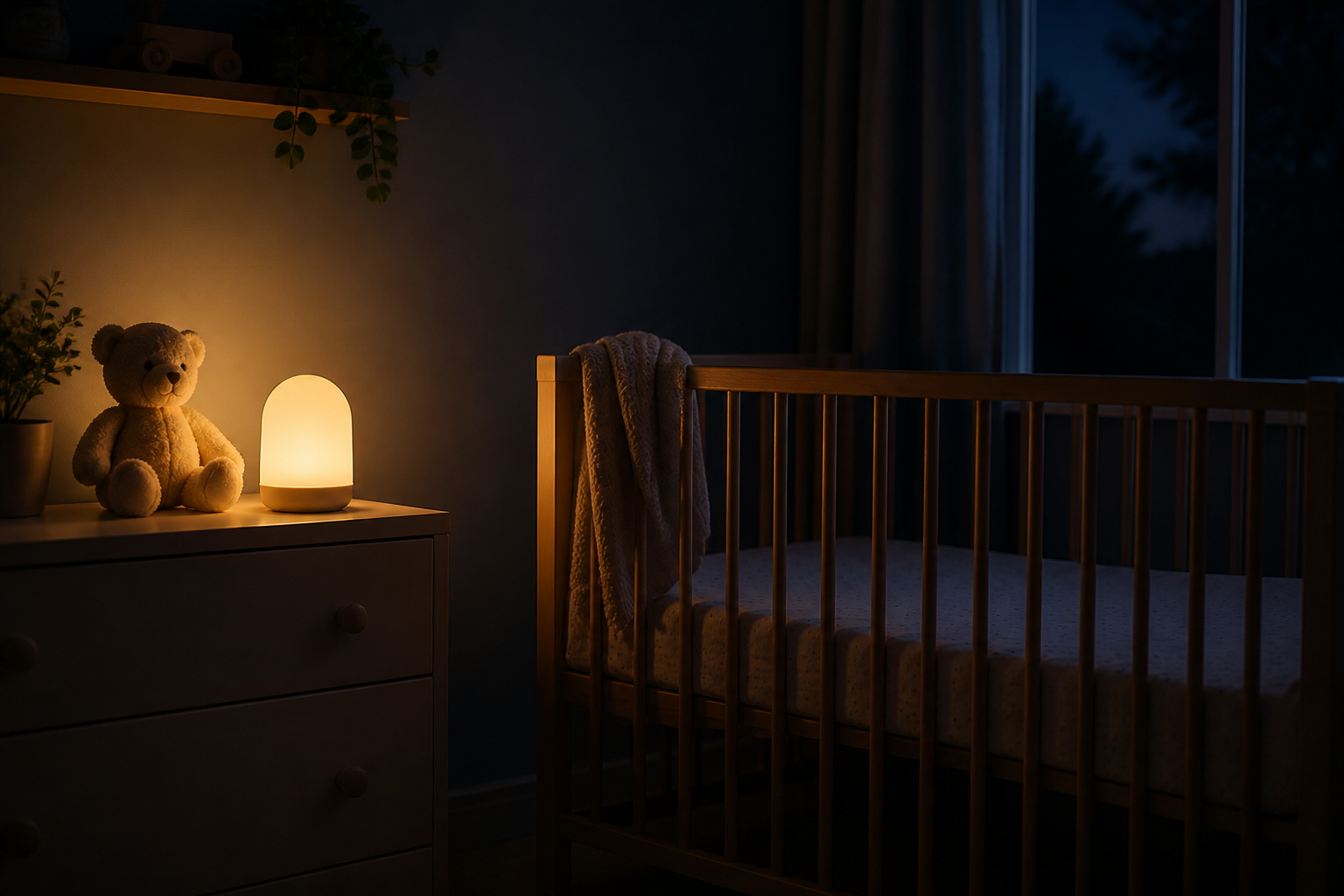
Better sleep for babies starts with a safe environment and realistic expectations — not a basket of unproven gadgets.

Baby Common curates nursery furniture, monitors, and everyday essentials.
Follow safe sleep fundamentals
The foundation does not change with trends or marketing: alone, on the back, on a firm flat surface, in a safety-approved crib or bassinet, without loose bedding.
The non-negotiables
| Principle | What it means |
|---|---|
| Alone | Baby sleeps in their own sleep space — not with adults, siblings, or pets on the same surface |
| On the back | Every sleep, including naps, starts on the back |
| Firm and flat | No soft mattresses, toppers, inclined surfaces, or positioning devices in the crib |
| Approved sleep space | Crib, bassinet, or play yard designed and marketed for overnight infant sleep |
| No loose bedding | No blankets, bumpers, pillows, or stuffed animals in the sleep area |
Review crib safety basics for mattress fit, crib placement, and what to keep out of the sleep area. These rules apply in the nursery, your bedroom, and anywhere baby sleeps.
Room temperature and clothing
Overheating is a risk factor caregivers can control. You do not need a precise thermostat number for every home — aim for comfort and adjust based on how the room feels and how baby is dressed.
General temperature guidance
- Keep the room comfortably cool for an adult in light clothing
- Dress baby in one layer more than you would wear to be comfortable in the same room
- Use sleep sacks instead of loose blankets — they stay in place and reduce entanglement risk
- Avoid hats indoors during sleep unless medically advised
- Check baby’s chest or back of neck for warmth — hands and feet are often cooler and are not reliable indicators
Sleep sack and clothing guide
| Room feel | Typical clothing approach |
|---|---|
| Warm (summer, heated room) | Light onesie or diaper plus light sleep sack |
| Moderate | Onesie plus mid-weight sleep sack |
| Cool | Long-sleeve onesie or footed sleeper plus sleep sack |
Sleep sacks come in different fabric weights (sometimes labeled with TOG ratings). Start with one or two sacks and adjust based on your room and season. You do not need a full wardrobe of sleep sacks on day one.
Signs baby may be too warm
- Damp hair or sweaty neck
- Flushed cheeks
- Rapid breathing
- Fussiness that improves when you remove a layer
If you are unsure, ask your pediatrician what clothing layers they recommend for your climate and season.
Light and circadian rhythm
Newborns do not distinguish day and night immediately. Gentle habits help their internal clock develop over the first weeks and months.
Daytime habits
- Bright, natural light during awake periods when practical
- Normal household sounds and activity during day feeds
- Interactive time — talking, eye contact, tummy time when age-appropriate
Nighttime habits
- Dim lights during night feeds and diaper changes
- Quiet voices; avoid stimulating play or bright screens
- Keep interactions brief and calm — feed, change, back to sleep
Blackout curtains
Blackout curtains are optional. They help in bright climates, summer evenings, or if streetlights shine into the nursery. They are not required everywhere. If you use them, ensure the room does not become too warm from trapped heat during the day.
Night lights
A soft, warm night light helps you see during feeds without fully waking the household. Place it away from baby’s direct line of sight. Avoid blue-toned or bright lights during night wakings.
Sound environments
Some families use white noise to mask household sounds. Others sleep fine without it. If you use sound:
White noise guidelines
- Keep volume low — about the level of a soft shower or gentle rainfall
- Place the sound source away from the crib, not attached to it or inside the sleep space
- Use continuous sound for sleep if it helps; turn off when not needed
- Clean and maintain sound machines per manufacturer instructions
White noise is a tool for masking disruption — it does not replace a safe crib setup or correct sleep position.
Household sounds
Normal household noise during the day helps babies learn day vs. night. You do not need to tiptoe around a sleeping newborn during daytime naps, though sudden loud sounds may startle them.
Routines without rigid schedules
In the first months, a simple sequence matters more than a clock. Newborns eat and sleep on irregular cycles. Forcing a schedule that does not match your baby’s needs creates frustration for everyone.
A simple sleep routine sequence
- Feed — breast or bottle
- Diaper — check and change if needed
- Short awake window — calm interaction, burping, brief play when age-appropriate
- Down drowsy but awake when possible — place in crib on the back
“Drowsy but awake” means baby is sleepy but not fully asleep when placed in the crib. It does not work every time, especially in the first weeks. Do not stress if baby falls asleep in your arms — transfer to the crib when practical.
Flexibility checklist
- Same sleep space for naps and night sleep when possible (consistency helps)
- Similar sequence before naps and bedtime (feed, diaper, calm down)
- Adjust timing based on baby’s cues, not a fixed clock
- Accept that some days will not follow any pattern
For gear that supports the nursery routine, see newborn essentials for the first month.
Room-sharing setup
Many families room-share — baby sleeps in the same room as caregivers — for at least the first six months. Room-sharing makes feeding easier and keeps baby within sight.
Room-sharing tips
- Use a bassinet or crib beside the bed, not in the bed
- Keep the sleep surface clear — same rules as a nursery crib
- Plan how you will return baby to their sleep surface after night feeds if you bring them into bed briefly
- Ensure your path to the baby’s sleep space is clear for middle-of-the-night visits
See crib safety basics for room-sharing vs. bed-sharing guidance.
When to use a monitor
Audio or video monitors can help you hear or see baby from another room. They are tools for awareness — not a substitute for a safe crib setup.
Monitor considerations
| Factor | Guidance |
|---|---|
| Purpose | Awareness when baby is in a separate room; not required for room-sharing |
| Placement | Mount or route cords far from the crib |
| Limitations | Monitors do not prevent unsafe sleep environments or breathing issues |
| Type | Audio-only may suffice; video adds visual reassurance |
Browse health & safety for monitors that fit your home layout. Many families room-share without a monitor in the early months.
Nap sleep safety
Safe sleep rules apply to naps as well as nighttime sleep.
- Same crib or bassinet, same back position, same empty sleep surface
- Avoid extended sleep in car seats, swings, or bouncers — transfer to a firm, flat sleep surface when practical
- Caregivers (grandparents, daycare) should follow the same practices
If baby falls asleep in a carrier while you are awake and supervising, you can continue wearing or transfer to the crib when practical. Do not sleep while wearing baby on a couch or recliner.
Products to approach cautiously
Be skeptical of items that promise longer or safer sleep through positioning wedges, weighted products, or non-approved sleep surfaces.
Products to avoid for overnight crib sleep
| Product | Concern |
|---|---|
| Crib bumpers (including mesh) | Entrapment and suffocation risk per many guidelines |
| Positioning wedges and nests | Not designed for unattended overnight sleep |
| Weighted blankets or sleep sacks | Not recommended for infants unless directed by a clinician |
| Inclined sleepers in cribs | Follow product-specific guidance; many are not for overnight crib use |
| Loungers and docks in cribs | Not approved for unattended overnight sleep |
If a product is not marketed for overnight sleep in a crib, do not use it for overnight sleep. When in doubt, ask your pediatrician.
Products that may help (with realistic expectations)
| Product | Realistic role |
|---|---|
| Sleep sacks | Replace loose blankets; keep baby warm safely |
| White noise machine | Mask household sounds; low volume, away from crib |
| Blackout curtains | Darken room for naps; optional |
| Video monitor | Visual awareness; does not replace safe setup |
Browse nursery essentials for furniture and gear designed for infant sleep.
The nursery environment checklist
Use this checklist when setting up or auditing your baby’s sleep space.
Sleep surface
- Firm, flat mattress in approved crib or bassinet
- Snug fitted sheet only — no loose bedding
- Mattress at correct height for baby’s mobility
- No bumpers, pillows, toys, or positioners in crib
Room setup
- Crib away from windows, cords, and heaters
- Comfortable temperature; baby dressed in appropriate layers
- Dim lighting available for night feeds
- Monitor cords routed away from crib (if using a monitor)
Routine
- Consistent sleep space for naps and night when possible
- Simple pre-sleep sequence (feed, diaper, calm down)
- Back position for every sleep
For the full nursery plan, see our nursery setup checklist.
When sleep feels hard
Fragmented sleep is normal with a newborn. Night wakings for feeding are expected in the first months. This is not a sign that you are doing something wrong.
When to contact your pediatrician
- You are concerned about breathing, color, or lethargy
- Feeding or weight gain is struggling
- Baby is excessively fussy and nothing soothes them
- You notice patterns that worry you (snoring, pauses in breathing — describe what you observe)
When to ask for support for yourself
- You feel unsafe caring for baby due to exhaustion
- You are having thoughts of harming yourself or baby
- You feel overwhelmed, anxious, or depressed beyond typical new-parent fatigue
Support for parents is part of infant wellbeing. Ask your partner, family, friends, or healthcare provider for help. Sleep deprivation is real — you do not have to manage it alone.
Realistic expectations by age
Sleep patterns change rapidly in the first year. What works at 2 weeks may not work at 4 months.
| Age range | Typical pattern |
|---|---|
| 0–6 weeks | Frequent night wakings for feeding; irregular naps |
| 6–12 weeks | May begin slightly longer stretches; still frequent feeds |
| 3–4 months | Sleep cycles mature; possible “regression” with more wakings |
| 4–6 months | Some babies consolidate night sleep; others still wake to feed |
Individual variation is wide. Follow your baby’s cues and your pediatrician’s guidance rather than comparing to other families.
Related guides
Building a sleep-safe environment is one piece of preparing for baby. Continue with:
- Crib safety basics — mattress fit, placement, and what to avoid in the crib
- Nursery setup checklist — full room setup, storage, and gear priorities
- Newborn essentials for the first month — focused gear list for the first 30 days
For monitors, nursery furniture, and everyday essentials, browse health & safety and nursery essentials at Baby Common.
