
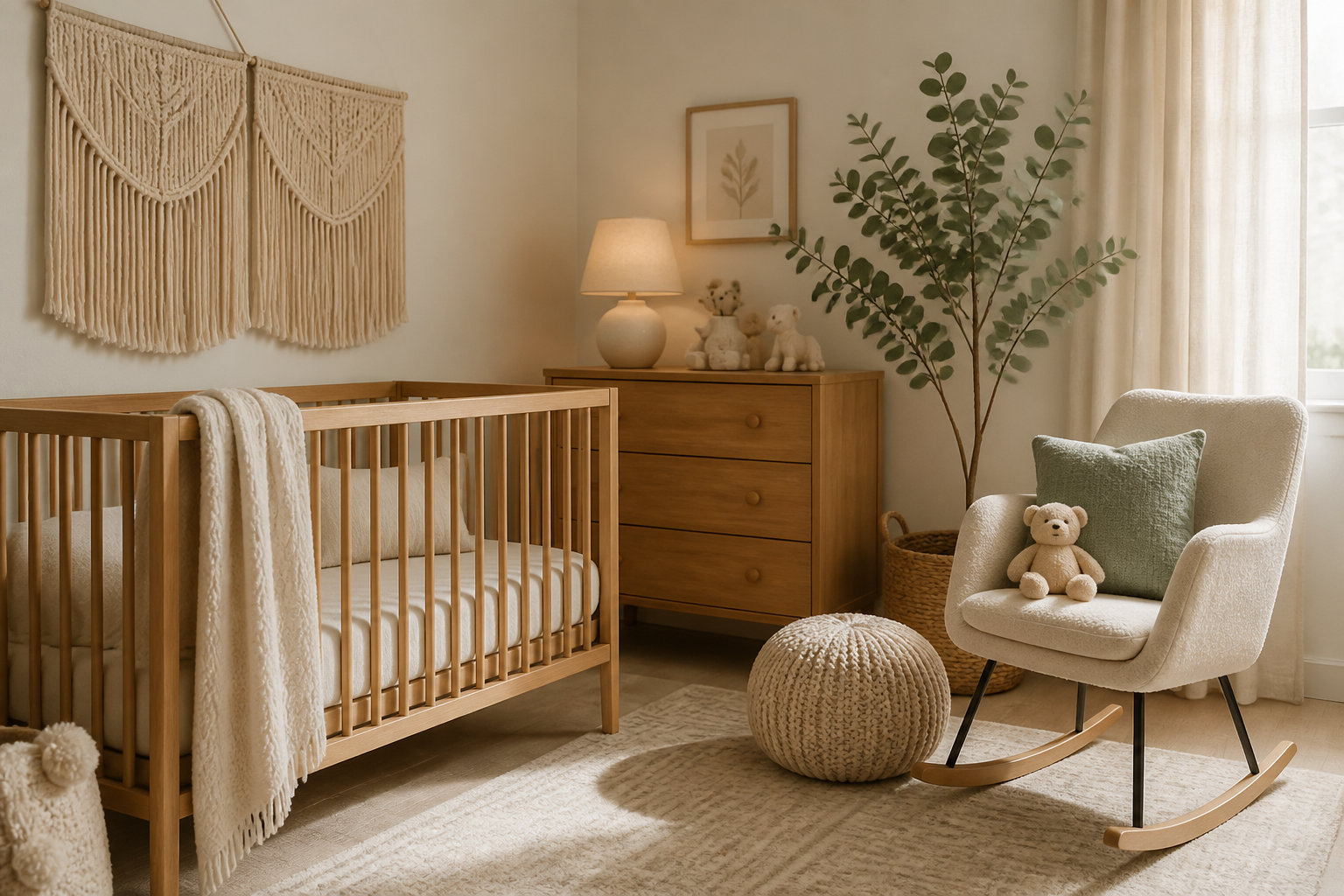
A calm nursery is not a showroom — it is a room you will walk through half-asleep, feed in at odd hours, and eventually know by muscle memory. The best nurseries balance how they look with how they work for tired parents.
This guide covers decor, lighting, textiles, and layout choices that create a peaceful atmosphere. Safety and sleep setup come first; aesthetics follow. Pair it with our nursery setup checklist and crib safety basics for the practical foundation.
Start with how the room should feel
Before choosing paint swatches or browsing wall art, decide what mood you want at 2 a.m.:
- Soft and cocooning — warm neutrals, dimmable light, minimal visual noise
- Bright and airy — white walls, natural light, light wood tones
- Grounded and earthy — sage, clay, oatmeal, woven textures
There is no wrong answer. The goal is a space where you feel settled — because a calm parent helps a calm baby more than any accent pillow ever will.
Color palette: less is more
Nurseries trend toward pastels, but you do not need a themed color story. A restrained palette is easier to live with and ages well as baby grows.
What works in practice
| Approach | Colors | Why parents like it |
|---|---|---|
| Warm neutral | Cream, oatmeal, soft taupe | Hides spit-up stains, pairs with any textile |
| Soft green | Sage, eucalyptus, muted olive | Calming without feeling cold |
| Gentle earth | Clay, terracotta accent, sand | Warm under artificial light at night |
| Classic white | White walls + wood furniture | Brightest in small rooms; add warmth through textiles |
Tip: Paint a large test patch and view it at night with your nursery lamp on. Colors shift dramatically under warm bulbs.
Avoid high-contrast patterns directly around the crib — bold graphics can be stimulating when baby is trying to settle. Save visual interest for areas away from the sleep zone.
Layered lighting: the most underrated decor decision
Lighting does more for nursery atmosphere than any wall decal. Plan three layers:
1. Ambient light
A ceiling fixture or floor lamp with a warm bulb (2700K–3000K) provides general illumination for diaper changes and outfit sorting. Choose a dimmable option if possible.
2. Task light
A small lamp on the dresser or feeding chair gives focused light without flooding the whole room. Look for fabric shades that diffuse glare — harsh light at 3 a.m. wakes everyone up.
3. Night light
A very soft glow helps you navigate without turning on overhead lights. Wall-mounted sconces, plug-in night lights, or a monitor with a built-in nursery nightlight all work. Our sleep-safe environment guide covers how much light is appropriate during sleep.

Textiles: where comfort meets decor
Textiles are the fastest way to make a nursery feel finished — and the easiest to swap as tastes change.
Crib area
Keep the crib itself simple: fitted sheet, sleep sack, nothing else inside per safe sleep guidance. Add warmth through a crib skirt, a knit throw draped over the rail (outside the crib), or a textured rug beneath.
Feeding chair zone
If you have a glider or armchair, layer a washable throw, a nursing pillow, and a small side table for water and your phone. This becomes your late-night headquarters — make it comfortable.
Window treatments
Blackout curtains are optional but helpful in bright climates. Linen or cotton curtains in a neutral tone soften the room even when open. Ensure cords are tied up or cordless — same safety rule as blind cords elsewhere in the room.
Rug
A low-pile, washable rug adds warmth underfoot during barefoot night walks. Natural fiber (jute, wool blend) or a soft cotton flat-weave both work.
Storage that looks intentional
Clutter is the enemy of a calm nursery. Visible mess raises stress; hidden storage lowers it.
- Open bins on a shelf for burp cloths and swaddles — label them if it helps your partner find things
- A lidded hamper that matches the room palette
- Drawer dividers in the dresser so onesies are not a tangled pile
- Wall hooks for upcoming outfit or sleep sack — hung out of baby’s reach
Decorative baskets are functional decor. A woven basket holding diapers looks better than a plastic package on the changing table.
Wall decor and personalization
You do not need to fill every wall before baby arrives. Start with one or two pieces and add over time.
Ideas that age well
- Framed botanical prints or simple line drawings
- A woven wall hanging above the dresser (not above the crib — nothing heavy over the sleep area)
- A growth chart on a side wall
- Family photos in secure frames, placed where they will not fall into the crib zone
- Baby’s name in wood letters or a simple print — skip if you are keeping the name private until birth
What to skip near the crib
- Heavy shelves or floating ledges directly above the sleep area
- String lights with loose cords
- Anything with small parts that could detach and fall
Sound, atmosphere, and the gear that stays out of the way
Nursery atmosphere is not only visual. Sound matters — for baby and for you.
White noise and ambient sound
Many families use a white noise machine to mask household sounds. Keep volume low and place the machine at least seven feet from the crib, not inside it. If you use a monitor with built-in lullabies, the same distance rule applies.
Baby monitors that blend into the room
A monitor is one of the few tech items that lives in the nursery permanently. Choose one that does not fight your decor or your sleep:
- Non-WiFi dedicated parent units avoid router dependency and keep nursery video off the cloud — helpful in older homes with thick walls
- Long wireless range matters when the nursery is on a different floor from your bedroom
- Long battery life on the parent unit means fewer midnight charging hunts
- White noise silencer technology filters background hum so you hear baby, not the air conditioner
- Low-emission wireless (such as Bebcare’s DSR Digital Safe Radio) appeals to parents researching EMF exposure
We carry the Bebcare Motion for families who want video with a dedicated parent unit, and the Bebcare Hear for audio-only setups — both are non-WiFi monitors with the range, battery life, and low-emission design that suit most US home layouts. For a full comparison, see our baby monitor buying guide.
Place the camera or audio unit where you can see or hear baby’s breathing — at least three feet from the crib, with cords secured and out of reach.
Layout: designing for 3 a.m. walks
Decor means nothing if you trip over a laundry basket on the way to the crib. Walk the room path you will use at night:
- Door → crib — clear, no rug edges to catch your foot
- Crib → changing area — supplies within arm’s reach
- Feeding chair → door — so you can leave without navigating obstacles
A nightlight in the hallway outside the nursery is as important as one inside.
Parenthood mindset: the room will evolve
The nursery you set up before birth will not be the nursery at six months, twelve months, or two years. Mobiles come down. The changing table becomes a dresser. The feeding chair moves to the living room.
Design for flexibility, not perfection:
- Choose furniture that works beyond infancy (a dresser doubles as a changing station)
- Skip expensive themed sets that baby will outgrow in a year
- Leave wall space empty — you will fill it with milestones, art, and memories over time
The most beautiful nurseries are the ones that get lived in, not the ones that look untouched.
Calm nursery checklist
Use this before baby arrives:
- Color palette chosen and tested under night lighting
- Three light layers planned: ambient, task, night
- Crib area kept minimal — safe sleep rules followed
- Storage bins and hamper in place
- Wall decor secured; nothing heavy above crib
- Window cords tied or cordless
- Clear walking path from door to crib
- Monitor placed safely (if using one) — cords secured, three feet from crib
- Feeding chair zone set up with pillow, water, and soft light
Continue reading
- Nursery setup checklist — full room setup and gear priorities
- Crib safety basics — mattress fit, bedding, and placement
- Creating a sleep-safe environment — temperature, light, and routines
- Baby monitor buying guide — how to choose video vs. audio monitoring
Browse nursery essentials and baby monitors at Baby Common.
